The Ultimate Guide to the Best POS System for Coffee Shops in Canada and the United States
Running a coffee shop is not the same as running a restaurant. It is not retail either.
It is high speed, high repetition, highly customized and extremely margin sensitive.
Between 6 am and 10 am, your entire day can be made or broken. Orders are customized down to milk type and sweetness level. Staff must move quickly. Customers expect mobile ordering, loyalty tracking and contactless payments without friction.
At the center of all of it is your point of sale system.
If you are searching for the best POS for coffee shops in Canada or the United States, this guide will walk you through what truly matters, what most ranking articles get wrong, and how to choose a system that supports long term growth instead of limiting it.
Why Most “Best Coffee Shop POS” Articles Are Incomplete
If you search online, you will see many list style articles that rank:
Top 5 POS systems for cafés
Best café POS 2026
Square vs Toast for coffee shops
Most of them:
Focus on brand popularity
Repeat feature lists
Ignore Canadian compliance
Avoid operational depth
Do not address multi location growth
They are written for clicks, not operators.
This guide is written for actual coffee shop owners and growing coffee brands.
Coffee Shops Have Operational Realities That Generic POS Systems Miss
Before comparing providers, you need to understand your own operational demands.
Coffee shops are unique in five major ways.
1. The Morning Rush Is a Controlled Sprint
A lunch rush in a restaurant is intense. A coffee rush is compressed chaos.
You may process:
60 to 120 transactions per hour per register
Multiple drink modifiers per order
High percentage of repeat customers
A slow interface adds friction instantly. Two extra taps per order during peak can mean dozens of lost transactions per day.
The best POS for coffee shops must prioritize speed of entry over visual complexity.
2. Drink Modifiers Are Your Business Model
In many cafés, the base drink is not where margin is made. It is in:
Alternative milks
Extra shots
Flavored syrups
Upsized drinks
Seasonal add ons
Your POS must handle:
Required modifier selection
Price adjustments automatically
Clean display formatting for baristas
Accurate reporting on modifier sales
If you cannot see how many oat milk upgrades you sold last month, you cannot optimize pricing.
3. Repeat Traffic Drives Revenue
Unlike many restaurants, coffee shops depend on repeat frequency.
A regular may visit:
Five times per week
Twenty times per month
Two hundred times per year
A built in loyalty system is not a marketing add on. It is revenue infrastructure.
The best systems allow:
Automatic point accumulation
Reward redemption at checkout
Customer profile tracking
Purchase history visibility
Targeted promotions
Separate loyalty systems create friction and data silos.
4. Labor Turnover Requires Simplicity
Many coffee shops hire:
Students
Part time staff
Seasonal workers
Training must be short and intuitive.
A complicated POS increases onboarding time and error rates. Simplicity at the counter translates directly into profitability.
5. Growth Requires Centralized Control
Even if you operate one café today, growth may be part of your plan.
Multi location operators require:
Centralized menu updates
Location specific pricing controls
Consolidated reporting
Shared loyalty databases
Permission based staff access
Switching POS systems after opening multiple stores is disruptive and expensive.
Choosing correctly at the beginning prevents future pain.
What Defines the Best POS System for Coffee Shops
To outperform generic comparisons, we need clear criteria.
Here are the non negotiables.
Speed Optimized Order Flow
Test this in real time.
How long does it take to ring:
Large oat milk latte
Extra shot
Half sweet
Add vanilla
If it takes more than a few seconds, it will slow your rush.
Look for:
Logical screen grouping
Modifier presets
Minimal screen transitions
One tap quantity adjustments
Easy split payments
Speed is not marketing language. It is measurable.
Advanced Modifier Architecture
The best coffee shop POS systems allow:
Nested modifier groups
Conditional modifiers
Default selections
Pricing logic tied to selection
Reporting at modifier level
For example, you should be able to answer:
How many almond milk substitutions did we sell this quarter?
Most basic systems cannot answer that clearly.
Integrated Online Ordering and Pickup
Online ordering is now part of daily operations.
Your POS should:
Sync menu automatically with online storefront
Control pickup timing
Limit orders during peak
Route orders directly to the counter display
Disconnected systems create errors, refunds and frustrated customers.
Loyalty That Actually Gets Used
Loyalty programs fail when they are too complicated.
Look for:
Automatic enrollment
Digital receipts
Simple reward logic
Points based or visit based options
Clear reporting on redemption rates
Coffee shops benefit from simplicity.
Inventory Tracking That Matches Café Reality
You do not need manufacturing software. But you do need:
Ingredient level tracking
Waste logging
Low stock alerts
Recipe level deductions
Beans and milk are core cost drivers. Visibility matters.
Reporting That Supports Real Decisions
Reporting should answer questions such as:
What time of day is most profitable
Which drinks drive the highest margin
Which location is outperforming others
How modifiers impact revenue
How loyalty affects repeat rate
If you must export to spreadsheets to understand basic trends, the system is not operator friendly.
Best POS Systems for Coffee Shops in North America
Now let us address the providers commonly ranked.
Most search results will include:
MYR
Square
Toast
Lightspeed
Clover
Each has strengths. But strengths depend on use case.
Retail First Systems
Some providers began in retail and later expanded into restaurants.
Strengths:
Simple interface
Accessible pricing
Easy hardware setup
Limitations:
Limited modifier depth
Add on heavy feature structure
Less focused on QSR volume workflows
Best suited for small, simple single location cafés.
Restaurant Focused Systems
Other systems were designed for quick service environments.
Strengths:
Strong modifier logic
High speed order flow
Built in online ordering
Centralized reporting
More suitable for:
High volume coffee shops
Multi location brands
Operators planning to scale
Why MYR Stands Out for Coffee Shop Operators
Unlike retail adapted systems, MYR was built around quick service workflows.
For coffee shops, this translates into:
Streamlined ordering during rush
Advanced modifier structure
Built in loyalty without additional subscriptions
Integrated online ordering
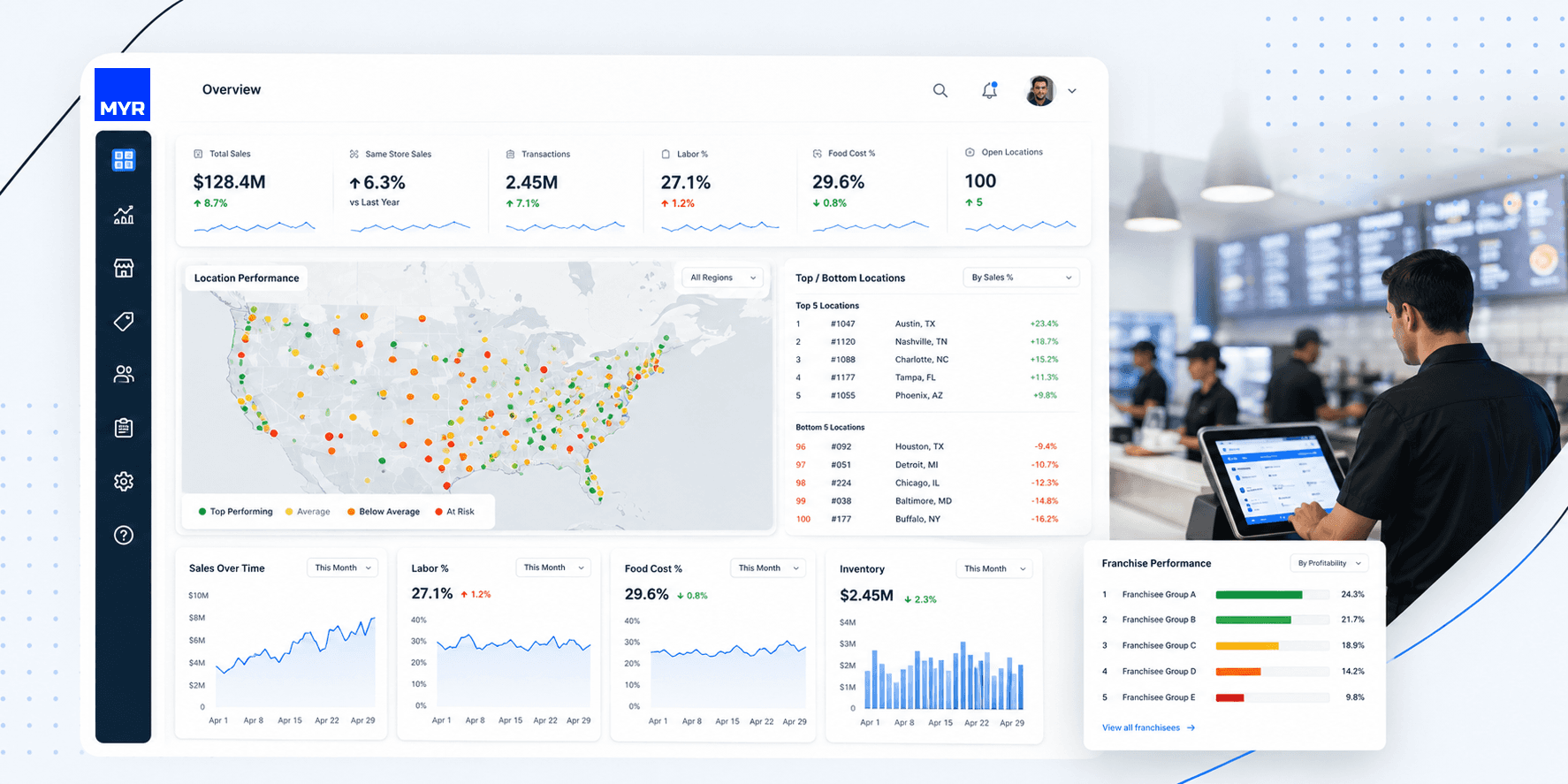
Centralized reporting for multiple locations
Compliance support in Canada and the United States
Instead of layering features onto a retail foundation, it is structured around high volume counter service environments.
You can explore the coffee specific features here: https://www.myr.io/coffee-shops
Best Coffee Shop POS in Canada
Canada introduces regulatory and tax complexity that many United States providers overlook.
Operators must manage:
GST and HST variations
Provincial sales tax where applicable
Quebec fiscal compliance
In Quebec, businesses must comply with requirements set by Revenu Québec including WEB-SRM integration for proper fiscal reporting.
A coffee shop POS in Canada should support:
Automated tax calculations by province
Quebec fiscal device compatibility
Bilingual receipt options where needed
Canadian payment processing integration
If a provider focuses primarily on United States markets, Canadian support may be secondary.
For Canadian coffee shop owners, this matters significantly.
Best Coffee Shop POS in the United States
In the United States, complexity typically includes:
State and local sales tax variations
Tip tracking and reporting
Multi state expansion
Integration with delivery platforms
Coffee brands expanding across state lines need:
Consolidated reporting
Centralized menu control
Role based staff permissions
Unified loyalty database
Choosing a system that can handle multi state operations prevents future restructuring.
Single Location vs Multi Location Decision Framework
Here is a practical framework.
If You Operate One Location
Priorities should include:
Speed
Simplicity
Built in loyalty
Transparent pricing
Scalability
Do not choose a system that locks you into limitations if you plan to expand.
If You Operate Multiple Locations
You need:
Centralized reporting dashboard
Global menu editing
Location level overrides
Shared customer database
Advanced analytics
Not all providers handle multi location coffee operations equally well.
Coffee Shop POS Cost Breakdown
When evaluating cost, break it into categories:
Software subscription
Hardware
Payment processing
Add ons
Contract length
Ask providers:
Is loyalty included
Is online ordering included
Are there multi location fees
Is there a long term contract
What is the effective processing rate
The cheapest monthly subscription is rarely the lowest total cost.
Real Coffee Shop Case Scenarios
Urban Specialty Café
High customization. Strong loyalty focus. Seasonal drinks.
Needs:
Modifier depth
Customer profile tracking
Advanced reporting
Drive Through Coffee Stand
Extreme speed environment. High repetition.
Needs:
Fast order entry
Clear order display
Rapid payment processing
Expanding Regional Coffee Brand
Opening several stores per year.
Needs:
Central control
Multi location analytics
Unified loyalty
Scalable infrastructure
The POS must support both present operations and future growth.
Frequently Asked Questions
What is the best POS for coffee shops?
The best POS for coffee shops is one designed for high speed, modifier heavy environments with built in loyalty, integrated online ordering and scalable reporting across locations.
What POS do most cafés use?
Many small cafés use general purpose systems. Growing coffee brands often move to more operationally focused platforms that better support volume and customization.
Is MYR available in Canada and the United States?
Yes. MYR supports operators in both markets and addresses Canadian fiscal requirements as well as United States sales tax environments.
Do coffee shops need built in loyalty?
In most cases, yes. Coffee shops benefit from repeat frequency. Built in loyalty increases retention and simplifies tracking.
How much does a coffee shop POS system cost?
Costs vary depending on features, hardware and processing. Always evaluate total cost rather than subscription alone.
Final Thoughts
Choosing the best POS system for your coffee shop is not about brand popularity. It is about operational alignment.
Coffee shops demand speed, flexibility and repeat customer engagement. The right system supports those needs quietly and reliably every day.
Whether you operate a single café or a growing regional brand, select a platform built for your workflow, your compliance environment and your long term goals.
If you want to explore a solution structured around high volume coffee operations in both Canada and the United States, visit: https://www.myr.io/coffee-shops
Your POS should never be the bottleneck during your busiest hour. It should be the invisible engine behind your growth.